

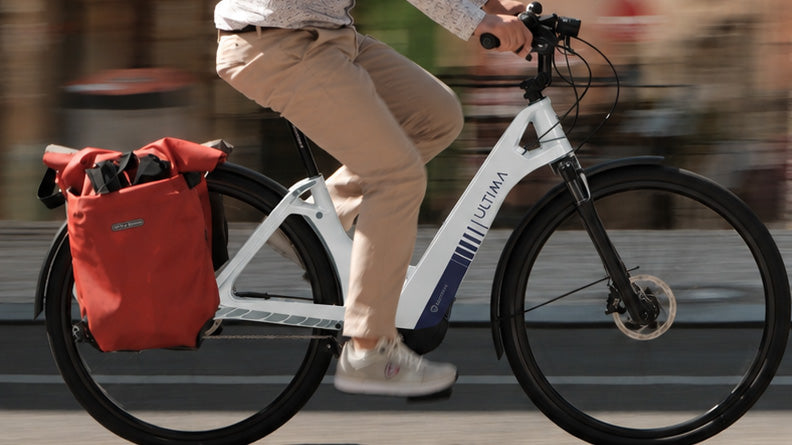
Doing the grocery shopping for the week or transporting heavy items is now part of everyday life for many urban cyclists. Electric assistance is a huge help for moving weight without getting tired. But loading your bike isn't something to be done haphazardly; the way you place your belongings changes everything for your balance, your braking, and your handling.
Choosing to commute by bike every day isn't easy when it comes to carrying luggage, which is why we've prepared some simple tips to transport your belongings safely, while making the most of your electric bike.
The golden rule: keep the weight as low as possible
The hardest part about carrying weight is preventing the bike from becoming unstable. The higher your items are placed, the more difficult the bike becomes to handle, especially when you are riding slowly or coming to a stop. To ensure easy and pleasant handling:
-
Put the heaviest items at the bottom: Bottles or heavy equipment should always be placed at the bottom of your panniers, as close to the ground as possible
-
Balance both sides well: If you are using two panniers, distribute the weight equally so you don't end up with a bike that leans to one side
-
Stay close to the frame: Keep the weight well-centered to avoid throwing off the balance of your handlebars or your rear wheel.
Panniers, baskets, or racks: which equipment should you choose?
Each accessory has its own use depending on what you are transporting.
Panniers attached to the luggage rack remain the most practical solution for daily use. They protect your belongings from rain and keep the weight very low on the rear wheel. For larger packages that don't fit into closed bags, baskets and flat racks allow you to easily secure your belongings with bungee cords.
If you prefer to install a front basket, be careful not to overload it; a front end that is too heavy makes steering harder and more difficult to guide in turns.
Adapting your riding style and anticipating on the road
Transporting heavy loads changes your usual reference points from the first few meters. The extra weight increases your stopping distance and makes changes in direction feel a bit heavier.
To ride safely in the city with your equipment:
-
Anticipate braking: Get into the habit of slowing down earlier, using both brakes simultaneously to maintain control of your trajectory
-
Maintain a smooth speed in turns: Avoid making sudden steering movements or braking while turning, which could cause you to lose balance due to the load
-
Accelerate gently: Use the electric assistance from the very first pedal strokes to clear intersections without struggling, all while maintaining a steady cadence.
Good habits to keep when riding a loaded bike
A loaded bike always takes a little getting used to. Before setting off, remember to check your tires: if they are low on air, they will squash under the weight, which risks damaging your wheels and making the bike heavy to handle. Finally, keep in mind that the bike will take a little longer to stop: anticipate your braking and use both brakes at the same time to come to a gentle stop.
FAQ: Transporting groceries and heavy loads by bike
How should I transport my groceries by bike?
The most practical way is to use waterproof panniers attached low on the rear rack or a basket attached to the front. Remember to place the heaviest items at the bottom of the bags to maintain good balance.
What is the maximum weight a cargo bike can support?
Most electric cargo bikes accept a total maximum load of between 180 kg and 250 kg (including the weight of the bike and the rider). The rack or box generally carries between 60 kg and 100 kg depending on the model.
How can I transport my belongings by bike?
You can distribute your belongings between side panniers, a front basket, or a light backpack, depending on your needs.
Share:
Automatic transmission on an electric bike: how does it work?
ReUltima - The second life of our bikes