

For a long time, cycling came with a constraint, especially anticipating hills. If you choose an electric bike with a manual gearbox, you still have to shift gears at the right time to avoid derailing, then remember to downshift before stopping at a red light.
Today, the advent of automatic transmission for electric bikes is transforming the riding experience.
Discover how this technology works, notably powered by the Valeo Cyclee motor on Ultima Mobility models.
A fully integrated motor and gearbox assembly
On a classic bicycle, the derailleur moves the chain over different sprockets located on the rear wheel. This is an open-air mechanism, often exposed to derailing or premature wear.
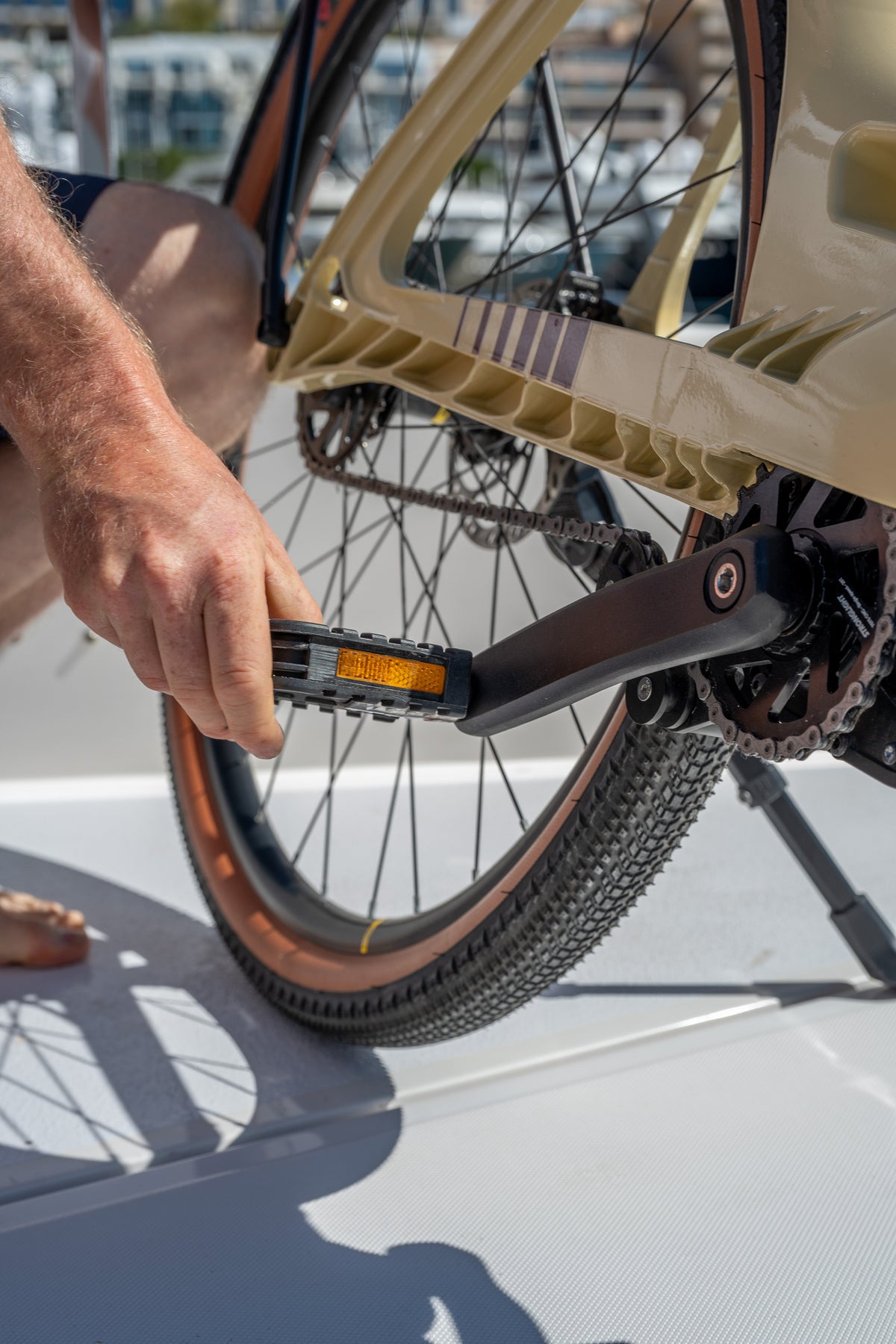
The automatic system adopts a different approach, directly inspired by innovations in the automotive industry. Instead of separating the motorization and gear shifting or using a simple internal gear hub, the 48-volt electric motor powered by the battery and the 7-speed automatic gearbox are combined within a single unit located at the bottom bracket.
The chain remains straight and never jumps from one sprocket to another. The entire mechanism is sealed, protected from shocks and bad weather, which drastically reduces daily maintenance needs.
How does the system make the right decision?
The system's intelligence relies on a series of integrated sensors and a predictive algorithm that analyzes your movements in real time.
- Measure your pace: You simply define your preferred pedaling cadence (your comfort speed for turning your legs)
- Terrain analysis: The system instantly calculates the bike's speed, the road's incline, and the force you exert on the pedals
- Smooth gear changes: If you approach a hill, the bike detects resistance and immediately downshifts to the appropriate gear. Conversely, if you pick up speed on flat ground, it shifts to a higher gear
All this management is done in a fraction of a second. You don't need to touch a lever on the steering wheel or handlebars: the system adapts to you, not the other way around.
Valeo Cyclee technology: the power and comfort of Ultima Mobility
On Ultima Mobility electric bikes, such as the Multipath range, this technology is embodied through the Valeo Cyclee motor. This system delivers an impressive torque of 130 Nm, allowing the bike to restart effortlessly, even when heavily loaded with children or belongings.
This motor offers two features for everyday use:
-
Shifting gears under load: It is possible to change gears when going uphill or pedaling hard without blocking the mechanism
-
Downshifting when stopped: In case of an unexpected stop at a red light, the system automatically puts the bike back into first gear. You then restart with surprising lightness without needing to force it
Everyday benefits
Adopting automatic transmission on an electric bike eliminates the mental fatigue associated with gear shifting. You can concentrate all your attention on traffic, the road, and your safety, which makes urban commuting much more peaceful. Mechanically, with the motor always operating at the ideal speed and the chain remaining constantly aligned, the transmission undergoes much less wear. As a result, you have a more reliable, durable, and pleasant bike to use every day.
FAQ: Automatic transmission on an electric bike: how does it work?
How does an automatic transmission work?
An automatic transmission analyzes the incline, speed, and force exerted on the pedals using integrated sensors. The algorithm then adapts the ideal gear in real time at the motor, without the cyclist needing to operate a lever.
How do you shift gears on an electric bike?
On a classic model, shifting is done manually at the handlebars using a lever that moves the chain over the cassette while slightly releasing pressure on the pedals. On an electric bike with automatic transmission, the system manages everything itself, and no manual shifting is necessary.
Automatic transmission on an electric bike: how does it work?
The motor unit directly integrates the gearbox at the bottom bracket, as with the Valeo Cyclee system. Depending on your target pedaling rhythm, the bike itself adjusts the 7 gears to provide smooth assistance and effortless restarts, even from a standstill.
How does a bicycle's transmission system work?
The transmission converts the force of the legs applied to the pedals into rotational movement transmitted to the rear wheel via a chain or belt. The set of sprockets and chainrings changes the gear ratio to adapt the effort required depending on the terrain.
Share:
Electric bike or second car. Which to choose for the family?