

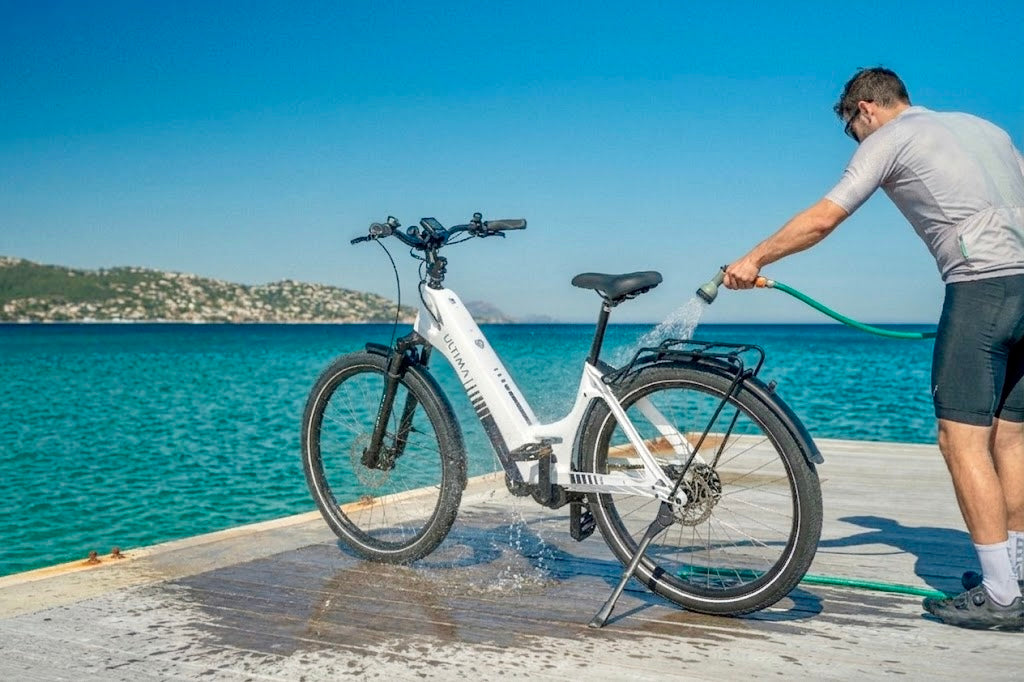
When summer arrives and temperatures steadily climb, the city experiences a stifling heatwave. In these moments, an electric bike seems like a blessing to avoid sweating on public transport or spending too much time in a car without air conditioning. However, riding in scorching heat isn't something you can do without preparation. To ensure your journey remains enjoyable and your equipment doesn't suffer, here are our tips and best practices for riding during a heatwave.
Protecting the battery: the heart of the bike dislikes heat
If the cyclist suffers from the heat, the battery of your electric bike fears it just as much. The batteries in our bikes are designed to operate optimally between 15°C and 25°C. Temperatures
-
The parking trap: Never leave your bike parked in direct sunlight for hours in public spaces. The black surfaces of the frame and components can quickly exceed 60°C, which accelerates the premature aging of electronic components and your battery cells. Opt for the shade of a tree, an underground car park, or a sheltered hall.
-
Charging time: This is the golden rule. Never plug in a battery immediately after a ride in intense heat. To avoid any risk, let it rest and return to room temperature in a cool place before recharging it. Charging an already hot battery is the best way to reduce its lifespan.
Adapt your riding style and assistance level
During a heatwave, effort management policies must change. Even if electric assistance does most of the work, your body struggles to regulate its temperature.
Increase the assistance level to minimize your physical effort and avoid heatstroke. At the same time, be gentle with the motor on very steep inclines by downshifting to maintain a fluid pedaling cadence, which prevents the electrical system from overheating by demanding too much torque at once. You shouldn't be surprised by a drop in motor performance on a steep slope, as the motor may protect itself and activate "derating" (power limitation) modes.
Beware of infrastructure
Under the scorching sun, urban asphalt changes behavior. Tarmac can soften in places, which affects tire grip, especially on sharp turns. Stay vigilant regarding white road markings, which sometimes become slippery in extreme heat, and adjust your safety distances.
Cyclist's "anti-heatstroke" equipment
To face UV rays at 25 km/h, your equipment must be adapted:
-
Maximum hydration: An insulated water bottle is essential. Drink in small sips every ten minutes, without waiting until you are thirsty.
-
Clothing: Even if it's not obvious, opt for loose-fitting cuts and technical, breathable materials that allow air to pass through. Contrary to popular belief, a light long-sleeved shirt protects better from the sun than a tank top.
-
Sunscreen and glasses: The wind at speed offers a deceptive feeling of coolness that makes you forget the strength of UV rays. Protect your skin and eyes on every ride.
FAQ: Riding in hot weather
Can the motor shut off automatically in case of overheating?
Yes. Modern electric bikes are equipped with thermal safety sensors. If the system reaches a critical temperature, assistance first begins to limit itself and then can go as far as automatically shutting off to protect the motor and battery. You then just need to stop in the shade for a few minutes.
Should you slightly deflate your tires in summer?
No, tire pressures have been defined by the manufacturer to adapt to fluctuations in outside temperature and especially road temperature. Riding with under-inflated tires increases the contact surface with hot asphalt, which increases friction and prematurely wears out the tire. Follow the recommended pressures.
Is it possible to use an electric bike during a heatwave?
Yes, but protect the battery by avoiding parking the bike in direct sunlight and wait for it to cool down in the shade before recharging it. For riding, increase assistance to limit your physical effort and hydrate regularly to compensate for the deceptive cooling effect of the breeze that masks perspiration.
Share:
Urban safety: why is the Multipath ideal in the city?
Helmet, panniers, accessories: the perfect e-bike equipment guide