

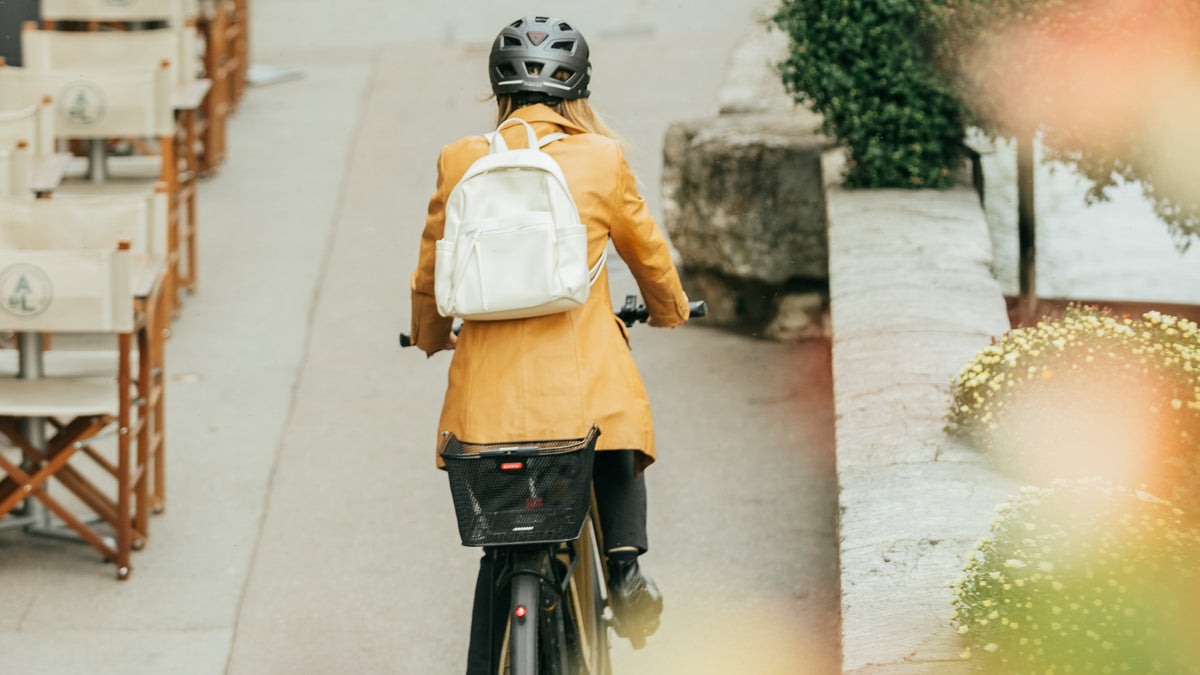
As soon as temperatures drop and the days get shorter, many cyclists put their bike away in the garage. It's a shame: cycling in winter is perfectly possible, and even very enjoyable when you are well prepared. Fresh air, quieter roads, a morning energy boost… and the satisfaction of not being stuck in traffic.
In this article, we share our tips for riding in cold weather: the right gear, the right clothing, what to know about an electric bike in winter, and the habits to adopt for your winter bike commute.
Why keep pedalling in winter?
Riding all year round has plenty of benefits:
- Stay fit: regular activity boosts immunity and mood when daylight is scarce.
- Save time: in the city, the bike is often faster than the car at rush hour.
- Save money: no fuel, no parking fees, minimal maintenance.
- Keep good habits: if you ride in winter, getting back into it in spring is effortless.
Which winter cycling clothing should you choose?
The secret to staying warm is the three-layer system. It lets you adapt to the temperature, your effort level and the weather.
1. The base layer: wick away sweat
Choose a breathable, long-sleeved base layer in merino wool or technical synthetic fibers. Avoid cotton: it holds moisture and cools the body quickly.
2. The middle layer: retain heat
A thermal jersey, a thin fleece or an insulated vest keeps warmth close to your body while letting perspiration escape.
3. The outer layer: block wind and rain
A windproof, water-repellent or waterproof jacket, ideally with vents and reflective strips, makes all the difference. Choose a cut that is longer at the back to protect your lower back.
Don't neglect your extremities
They are the first to suffer when you ride in cold weather:
- Hands: windproof gloves that are warm enough but still let you feel the brakes and shifters.
- Feet: warm socks (merino) and overshoes or waterproof shoes.
- Head and neck: a thin under-helmet cap, a suitable beanie or a neck warmer protects against wind without getting in the way of your helmet.
- Legs: thermal tights or trousers, with waterproof over-trousers if needed.
Electric bike in winter: what you need to know
An electric bike in winter is a great ally: the assistance limits sweating (and therefore chilling) and makes rides easier despite wind and cold. A few precautions will help protect it, though.
Look after the battery
- Cold temporarily reduces range: a lithium-ion battery delivers less energy at low temperatures. Plan a safety margin on your trips.
- Charge indoors: let the battery return to room temperature before charging.
- Store it somewhere warm: if possible, remove it from the bike and keep it inside overnight.
- Use a thermal cover to limit range loss while riding.
Adjust your assistance level
On wet or slippery surfaces, avoid very high assistance levels when starting off. Gradual acceleration gives you more control and grip.
Clean and protect your bike
Salt, mud and moisture are the enemies of the drivetrain. Rinse your bike with clean water (never with a high-pressure jet on the motor or battery), dry it, then lubricate the chain with a lubricant suited to wet conditions.
Winter bike commuting: get organized and ride with confidence
A winter bike commute takes a little organization, but good habits form quickly.
- Prepare your things the night before: clothing, gloves, charged lights, spare clothes.
- Keep a change of clothes at the office, especially for rainy days.
- Protect your belongings with waterproof panniers or a rain cover.
- Allow extra time: ride a little slower and keep a margin.
- Check the weather and watch for ice warnings.
Bike equipment: the essentials
Powerful lighting
In winter, it gets dark early and the sun rises late. Bright front and rear lights, fully charged, are essential. Add reflective strips, a high-visibility vest and reflectors on your pedals or wheels: being seen is priority number one.
Mudguards
They protect you from splashes and keep your clothes and drivetrain clean. In the rain, they are almost a must.
Suitable tires
Choose tires with good tread and a puncture-protection layer. Slightly lower the pressure (within the limits shown on the sidewall) to improve grip on wet roads. On very slippery roads, winter or studded tires can be useful.
Brakes in good condition
Worn pads or dirty discs: moisture increases braking distances. Check your brakes regularly before and during the cold season.
Smart habits for riding in cold weather
- Warm up gently: start slowly to let your body reach its working temperature.
- Anticipate braking: stopping distances increase on wet or cold surfaces.
- Be careful in corners and on slippery surfaces: painted crossings, manhole covers, fallen leaves, tram tracks.
- Watch out for ice, especially early in the morning, on bridges and in shaded areas.
- Keep your distance from vehicles and signal your intentions clearly.
- Stay hydrated: you drink less when it's cold, but your body still needs it.
- Don't overdress: if you're warm when you set off, you'll be cold when you arrive.
Quick pre-ride checklist
- ✔ Front and rear lights charged
- ✔ Tire pressure checked
- ✔ Battery charged (electric bike)
- ✔ Gloves, beanie or under-helmet cap, neck warmer
- ✔ Windproof or waterproof jacket
- ✔ Chain clean and lubricated
- ✔ Route and weather checked
In summary
Cycling in winter is not complicated: with the right winter cycling clothing, a well-maintained bike and a few smart habits, you can ride with confidence all year round. And if you're looking for a reliable, comfortable bike ready for every season, an electric bike remains one of the best choices for a winter bike commute.
At Ultima Mobility, we help you choose the bike and accessories that fit your daily life. Any questions? Feel free to get in touch.
Share:
The innovations making electric bikes simpler