

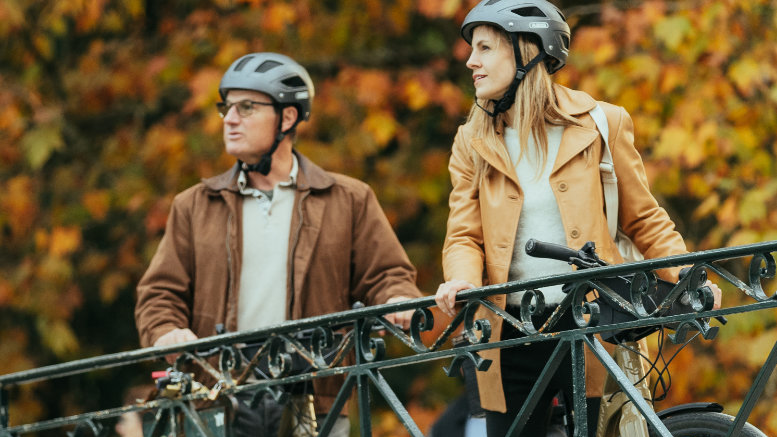
The autumn has some real assets for cycling outings: the air is fresh, the landscapes change color and the city regains a calmer pace. But this season can also seem more frightening for cyclists. Between the more frequent rain, the shortening days and the slippery surfaces, it is better to adjust a few habits to continue riding safely. To comfort you, here is our advice for tackling this autumn and riding with peace of mind.
Understanding the challenges of autumn for cyclists
Autumn weather and its impacts on cycling
In autumn, the weather changes quickly. A dry morning can quickly give way to rain at the end of the day. These repeated weather changes directly affect road holding and require a little more anticipation on the road from you.
Reduced visibility
When the days get shorter, and the nights become longer, the brightness drops suddenly at the end of the afternoon. Between the low sky, the rain and the fog, visibility drops significantly: you see less far and cars spot you much later.
Dead leaves and other obstacles
Wet leaves on the asphalt are like a real skating rink. Beyond the risk of slipping, they also hide ground hazards such as manhole covers or sidewalk curbs.
Protective equipment for your safety
Appropriate clothing for cyclists in autumn
The three-layer rule remains the most effective: a breathable first layer, a warm sweater and a waterproof and windproof jacket. Also think about protecting your extremities with waterproof gloves and a helmet liner.
Essential safety accessories
Powerful lighting: A high-performance front light and a rear light remain essential to see the road surface and be seen by other road users, even in broad daylight when the sky is dark.
Reflective elements: Vests or accessories to make you visible under headlights.
Adapting your riding style during autumn outings
Redoubling vigilance
In autumn, the key is to anticipate. Increase your safety distances with vehicles ahead of you, because braking distances increase significantly on wet surfaces.
Riding techniques to adopt
Brake gently: Dose your braking progressively and avoid sudden braking, especially at the front on wet roads.
Take corners flat: Keep the bike as straight as possible in turns as soon as you encounter wet leaves or white lines.
Adjust tire pressure: Slightly deflating your tires provides a better contact surface and more grip on wet surfaces.
Take advantage of technology: Automatic transmission prevents you from looking for the right gear on the handlebars and allows you to keep your hands on the brakes and all your attention on the path.
Faq - adapting your bike riding in autumn
What are the essential safety accessories in autumn?
The essentials remain a good set of LED lights, full-coverage mudguards, a waterproof jacket and reflective elements.
How to maintain your bike for autumn?
Rinse the transmission to remove mud and leaves, dry then oil the chain with a lubricant suitable for wet conditions, and check the wear of your brakes.
What techniques to use to avoid accidents due to dead leaves?
Slow down before reaching leaf-covered areas, do not brake suddenly on them and pass through the area keeping the bike straight.
How to stay motivated to cycle in autumn despite bad weather?
Equip yourself with good waterproof clothing, opt for well-lit routes and rely on a reliable and comfortable electric bike that simplifies the ride.
Share:
Riding safely at night: advice and prevention for your bike trips